Why Every Book Lover Needs a Library Book Loan Log
Books have a way of moving through our lives—borrowed from a friend, lent to a colleague, picked up from a community shelf, or checked out from a local library. Yet for all the joy they bring, keeping track of where each volume goes can become surprisingly complicated. A Library Book Loan Log solves this quiet but persistent problem. Whether you manage a personal collection, run a small community library, or simply enjoy lending titles to friends and family, a structured log transforms chaos into clarity. This article explores why the Library Book Loan Log is more relevant than ever, how it fits into modern reading habits, and exactly what you get when you download the complete template pack.
The Quiet Chaos of Unreturned Books
Most people have experienced the moment when a favorite book vanishes into someone else’s home. You remember lending it, but you cannot recall to whom or when. Weeks turn into months, and eventually the book is gone for good. This scenario is so universal that it has become a gentle joke among readers. Yet the consequences go beyond mild frustration. For educators, freelancers, and small business owners who rely on reference materials, lost books can mean lost productivity. For bloggers and creators who build content around specific titles, a missing volume can derail a project. A Library Book Loan Log offers a straightforward remedy—a single place to record every transaction, so nothing slips through the cracks.
How Book Tracking Has Evolved
Not long ago, tracking lent books meant scribbling notes on scraps of paper or relying on memory alone. Both methods fail under the weight of even a modest collection. As personal libraries have grown—and as more people share resources through lending circles, little free libraries, and professional networks—the need for a reliable tracking system has become clear. Digital tools exist, but many readers still prefer a physical record. A printed log offers permanence, no login required, and a satisfying tactile experience. The Library Book Loan Log bridges this gap beautifully. It combines the simplicity of a paper record with the polish and versatility of a professionally designed template that you can edit, print, or upload directly to platforms like KDP.
What the Library Book Loan Log Template Pack Includes
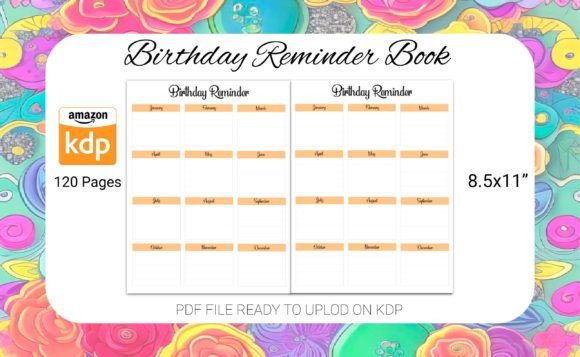
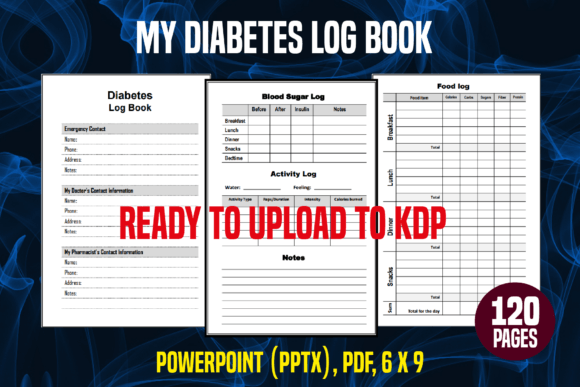
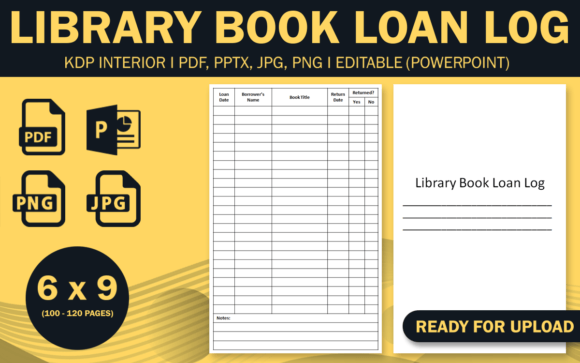
When you download this Library Book Loan Log, you receive a complete set of files designed for immediate use. The pack includes an editable source file in PowerPoint PPTX format, so you can customize fields, add your own branding, or adjust the layout to suit your specific needs. Two PDF interiors are ready for upload to KDP or for at-home printing—these files have been tested on KDP to ensure compatibility. A JPG file and a PNG file provide additional flexibility for digital previews, social media sharing, or quick reference. The trim size is a standard 6 × 9 inches with no bleed, making it easy to print at home or through a service. You also get two interior options: one with 100 pages and another with 120 pages. All interiors are high-resolution, so your final product looks crisp and professional.
Why Two Different Page Counts Matter
Not every reader needs the same level of capacity. A 100-page interior works well for someone tracking a moderate flow of books—perhaps a few loans per month. The 120-page option suits heavier use, such as a small classroom, a book club coordinator, or a freelancer who regularly lends reference materials. Offering both versions means you choose the format that fits your actual usage, rather than forcing a one-size-fits-all solution. This flexibility is especially valuable if you plan to publish through KDP, where page count affects both cost and reader perception. The Library Book Loan Log lets you match the tool to the task.
Current Trends Driving Interest in Borrowing Logs
Several broader shifts are making people pay more attention to how they manage their book collections. First, the rise of minimalist and intentional living has encouraged individuals to borrow rather than buy. Instead of accumulating stacks of unread titles, many now turn to libraries, lending networks, and peer exchanges. This trend reduces clutter and saves money, but it also increases the number of books flowing in and out of a household. Without a log, that flow becomes invisible. Second, the growth of small creative businesses—freelance writers, online educators, content creators—means more professionals depend on a curated set of resources. When a key book goes missing, work suffers. Third, community-driven initiatives like little free libraries and neighborhood book swaps have multiplied. Volunteers running these efforts need a simple way to track inventory. A printed log meets that need without requiring an app or internet connection.
Practical Benefits for Different Users
The Library Book Loan Log is not a one-size-fits-all product, but it does serve a wide range of people with equal effectiveness. Consider these scenarios:
- Educators and tutors often lend books from their personal collection to students. A log keeps a clear record of which title went to whom and when it should be returned. This prevents awkward reminders and helps maintain a professional relationship.
- Book club organizers manage multiple copies of the same title circulating among members. Without a log, it is easy to lose track of who has which edition. The Library Book Loan Log provides a central record that everyone can reference.
- Freelancers and creators who research across many fields frequently borrow and lend specialized books. A log ensures that resources remain available when a project deadline looms.
- Hobbyists and curious readers who participate in book swaps or maintain a personal lending library at home can enjoy the peace of mind that comes from knowing exactly where each book is.
- Small business owners who keep a library for their team can track usage, identify popular titles, and manage budgets for new purchases.
In every case, the log does more than record transactions—it builds trust. When you lend a book and hand the borrower a log entry to sign, the act becomes a small but meaningful exchange. It signals that you value your collection and respect the borrower’s responsibility.
How the Log Fits Into Modern Workflows
One of the most appealing aspects of the Library Book Loan Log is how seamlessly it integrates into existing routines. You do not need to learn new software, sync devices, or remember a password. The printed form sits on a shelf or in a binder, ready for use whenever a book changes hands. The editable PowerPoint file, however, gives you the freedom to adapt the log to digital workflows if you prefer. You can type entries directly on your computer, save the file, and print only when needed. This dual capability—physical and digital—reflects the reality of how many people now work and live. Some tasks feel better on paper; others are faster on screen. The Library Book Loan Log respects both preferences.
Quality That Matters for Publishing and Printing
If you plan to publish through KDP or another print-on-demand platform, the included PDF files have been tested to ensure they meet technical requirements. The 6 × 9 trim size with no bleed is a standard choice that works well for both paperback and spiral-bound formats. High-resolution interiors mean that text and lines are sharp, even when printed at fine settings. The two interior options (100 and 120 pages) give you the freedom to choose a thickness that feels substantial without being bulky. For those who want to edit the log before publishing, the PPTX source file is fully customizable. You can change fonts, colors, labels, and layout elements to match your brand or personal style.
Realistic Observations About Tracking and Accountability
No system is perfect, and a book loan log works best when paired with reasonable expectations. Some borrowers will still forget to return books, and some entries may go unfilled. But a log dramatically reduces the frequency of lost books and misunderstandings. It also provides a gentle social nudge: when someone sees their name and the date written down, they are more likely to remember the loan. Over time, using the log becomes a habit, and the habit reinforces a culture of respect around shared resources. The Library Book Loan Log does not claim to solve every problem, but it addresses the most common one—lack of a reliable record—with a thoughtful, practical tool.
Recommendations for Getting the Most Out of the Log
To make the Library Book Loan Log a true asset, consider a few simple practices. First, place the log in a consistent location where you will see it every time a book is about to leave your possession. A shelf near your door or your main reading area works well. Second, ask every borrower to initial or sign the entry. This small act of acknowledgment increases accountability. Third, review the log periodically—once a month is enough—to see which books are overdue. A gentle reminder can often recover a loan that might otherwise be forgotten. Fourth, if you are using the log for a community project or book club, share access to the digital file so multiple people can enter data. The editable PPTX format makes this collaboration straightforward.
Why the Library Book Loan Log Matters Right Now
Reading habits continue to evolve, but the fundamental act of sharing a book has not changed. People still want to loan and borrow. What has changed is the sheer number of books many of us interact with and the speed at which they move. A digital calendar or a notebook might work in a pinch, but neither offers the combination of structure, portability, and professional design that the Library Book Loan Log provides. This template pack is not just a printable sheet—it is a complete system that respects your time, your collection, and your relationships with fellow readers. Whether you are a creator managing resources, an educator supporting students, or a book lover who simply wants to keep track, this log offers a clear path forward.
Final Thoughts on Owning Your Book Flow
A well-kept loan log does more than prevent lost books. It gives you confidence when you lend, clarity when you borrow, and a quiet sense of order in a world that often feels cluttered. The Library Book Loan Log, with its editable PowerPoint file, tested PDFs, high-resolution images, and flexible page counts, is built to support that confidence. Download the pack, open the file, and start recording. Your books will thank you, and so will the people who borrow them.