5 Column Ledger Book: A Practical Tool for Organized Financial Tracking
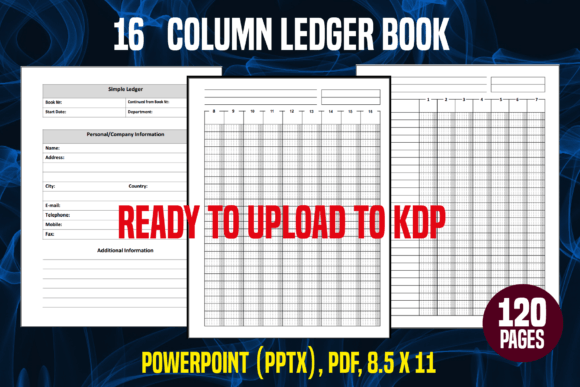
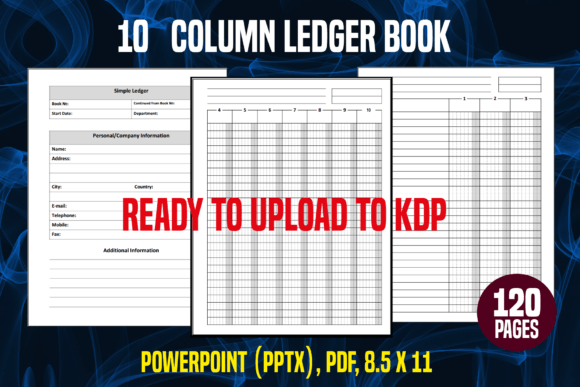
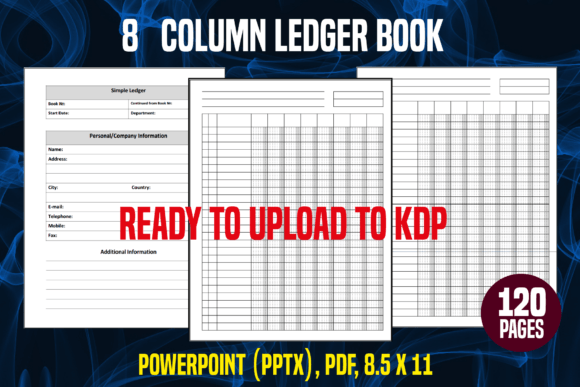
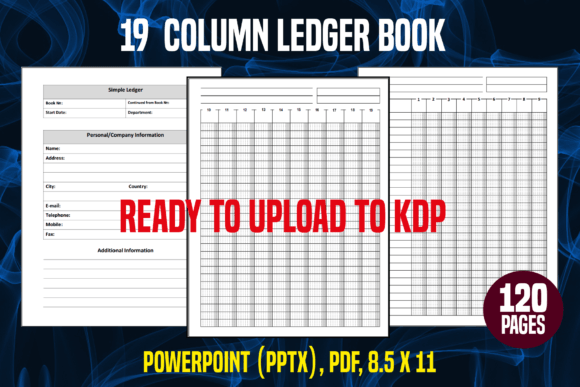
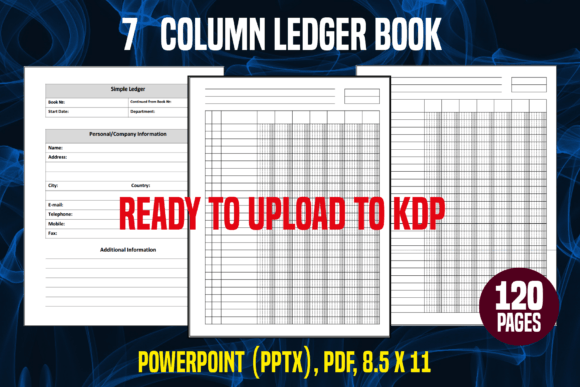
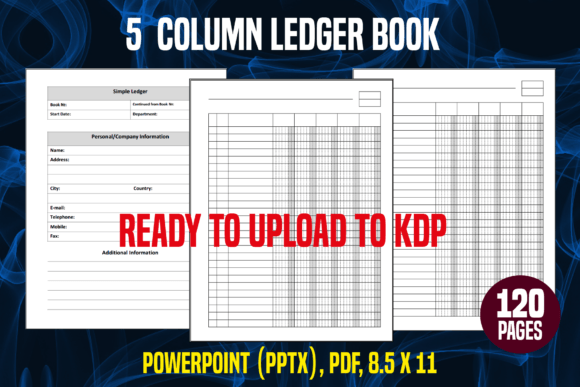
A 5 column ledger book is a structured accounting record that uses five vertical columns to track debits, credits, balances, and other financial data in a single, unified layout. Unlike simpler two- or three-column ledgers, the five-column format offers an additional layer of detail, making it a versatile tool for small business owners, bookkeepers, freelancers, and individuals who need to monitor multiple streams of income or expense. The version described here—a 120-page, 8.5 x 11 inch interior with high resolution, available as a PDF tested for Kindle Direct Publishing (KDP) and as an editable PowerPoint PPTX file—provides both a ready-to-print solution and a customizable template for those who prefer to adapt the layout to their specific needs.
What Exactly Is a 5 Column Ledger Book?
A 5 column ledger book organizes transactions across five distinct fields. Typically, these columns include date, description, debit, credit, and running balance, though variations exist depending on the intended use. Some layouts replace the running balance with columns for different account categories, such as cash, accounts receivable, inventory, or specific expense types. The key advantage is that the user can see all relevant transaction details on one line without flipping between pages or cross-referencing multiple spreadsheets. This design supports both double-entry and single-entry bookkeeping approaches, making it adaptable to different accounting methods.
The specific product in question—offered as a PDF and an editable PowerPoint file—is intended for users who want to either print the ledger directly or modify the template before printing. The inclusion of a PPTX file means you can adjust column headers, row spacing, or add custom fields before generating a final PDF for upload to KDP or for local printing. This flexibility is a significant differentiator compared to a static, non-editable ledger book.
Why Consider a 5 Column Ledger Book for Your Financial Tracking?
People typically turn to a 5 column ledger book when they need more than a basic register but less than full accounting software. The five-column structure provides enough granularity to categorize transactions without the complexity of a multi-page general ledger. For instance, a freelancer who receives income from several clients and pays multiple recurring expenses can track each line item with a clear debit, credit, and balance, while also noting the client or expense category in the description column.
Another common use case is for project-based budgeting. If you manage a small construction project, a community fundraiser, or a departmental budget, the fifth column can hold a running balance for each line item, giving you an instant snapshot of remaining funds. The 120-page count means you have ample room for a full year of weekly or even daily entries, depending on transaction volume.
The editable PowerPoint file adds a layer of convenience for users who want to customize the ledger before printing. You might change column headers to match your chart of accounts, adjust font sizes for readability, or merge cells for header sections. This makes the product suitable for both personal use and professional environments where standardized forms are required.
Benefits of Using a 5 Column Ledger Book
Clarity and organization. With five columns, each transaction is recorded with enough context to reduce confusion during review or audit. You are less likely to misplace a decimal or skip a line because the structure guides consistent data entry.
Physical record as a backup. Even in an era of cloud-based accounting, paper ledgers serve as a reliable offline backup. They do not require batteries, internet access, or software updates. For those who prefer handwriting entries, the tactile process can improve accuracy and retention of financial details.
Customizability through the editable file. Because the ZIP file contains a PowerPoint PPTX, you can modify the layout before finalizing the PDF. This is especially useful if you need to add extra columns, change the date format, or resize rows to accommodate larger handwriting.
KDP-ready printing. The PDF has been tested for Amazon KDP, which means the margins, bleed, and trim size (8.5 x 11 inches) are optimized for print-on-demand publishing. If you are creating a ledger book to sell or to use yourself, this eliminates the trial-and-error phase of setting up a print-ready file.
High resolution for clear output. The high-resolution interior ensures that lines, numbers, and text remain sharp, whether you print at home or via a professional service.
Tradeoffs and Considerations
While a 5 column ledger book offers clear advantages, it also comes with tradeoffs that may affect your decision to use it as your primary tracking tool.
Limited automation. Unlike spreadsheet software or accounting platforms, a paper ledger requires manual entry, addition, and error checking. If you process dozens of transactions per day, the manual approach may become time-consuming and prone to mistakes.
Single-user access. A physical ledger can only be used by one person at a time. If you need to collaborate with a bookkeeper, accountant, or business partner, you will need to share the physical book or transcribe entries into a digital format.
Column flexibility vs. rigidity. Although the editable PPTX file allows customization, the printed version is static. Once you print or publish the ledger, you cannot add new columns or change the layout mid-year. This requires careful planning before you start recording transactions.
Page count and volume. With 120 pages, you have about 120 lines per page (assuming one line per transaction), so roughly 14,400 entries. That is sufficient for most small-scale needs, but high-volume businesses may run out of space before the year ends. If you anticipate a high transaction volume, you might need multiple books or a different format.
No automatic reconciliation. Paper ledgers do not offer built-in bank reconciliation features. You will need to manually compare your entries against bank statements, which can be more time-consuming than using software that automates part of the process.
When Is a 5 Column Ledger Book a Strong Fit?
A 5 column ledger book is an excellent choice in several scenarios:
- Small business owners with low transaction volume: If you process fewer than 20 to 30 transactions per day, a manual ledger can be an affordable and straightforward way to maintain basic financial records without investing in software or hiring a bookkeeper.
- Freelancers and independent contractors: You can track income from multiple clients and expenses for supplies, travel, and utilities in a single book. The running balance column helps you monitor cash flow at a glance.
- Nonprofit organizations and clubs: For small groups that manage donations, membership fees, and event expenses, the five-column format offers sufficient structure without the overhead of formal accounting software.
- Individuals managing personal budgets: If you want to track your spending across several categories (housing, food, transportation, entertainment, savings), a custom five-column layout can help you see where your money goes each month.
- Print-on-demand publishers: If you are creating a ledger book to sell on KDP or other platforms, the provided PDF and PPTX files give you a tested, high-resolution interior that reduces setup time.
When Alternatives May Be Worth Considering
There are situations where a different tool might serve you better than a 5 column ledger book:
- High transaction volume: If you process hundreds of transactions per week, digital accounting software (e.g., QuickBooks, Xero, Wave) will save you significant time and reduce errors through automation and bank feeds.
- Multi-user collaboration: When you need real-time access for a bookkeeper, accountant, or business partner, cloud-based tools offer simultaneous multi-user access that a paper ledger cannot match.
- Complex accounting needs: If you require inventory tracking, payroll, job costing, or tax reporting in multiple jurisdictions, a manual five-column ledger will likely be insufficient. Full-featured accounting software or a general ledger with more columns and sub-ledgers would be necessary.
- Frequent changes to chart of accounts: If your business frequently adds or redefines income and expense categories, a static printed ledger may become obsolete before you fill it. A spreadsheet or database allows you to adapt dynamically.
- Digital-only workflow: If you prefer to keep all records on a computer or mobile device for searchability and backup, a paper ledger adds an extra step that may not align with your digital-first approach.
Practical Decision-Making Insights
Choosing between a 5 column ledger book and alternatives comes down to evaluating your specific needs for volume, flexibility, collaboration, and automation. Start by estimating how many transactions you record per day or per week. If that number is under 20 and you are comfortable with manual calculations, the ledger book is a practical, low-cost option. If the number is higher or you expect growth, consider whether you have the time to maintain manual records or whether a digital solution would be more efficient.
Next, consider who else needs access to your financial data. If you are the sole user, the paper ledger works well. If you share data with an accountant or tax preparer, you will need to either transcribe entries or provide scans of each page. Some users find that a hybrid approach works best: using a paper ledger for day-to-day recording and then entering summaries into software for reporting and tax preparation.
Also, think about how often your chart of accounts changes. If you have a stable set of income and expense categories, the five-column format can be customized once in the PowerPoint file and then printed for long-term use. If your categories shift frequently, you may want a more flexible digital tool.
Finally, evaluate the role of physical records in your workflow. Some people simply prefer handwriting financial data because it helps them stay engaged and aware of their spending patterns. Others see paper as a backup or a compliance requirement. Understanding your personal preference and your operational needs will guide you toward the right solution.
How to Determine If a 5 Column Ledger Book Aligns with Your Goals
To decide whether a 5 column ledger book is the right fit, ask yourself three questions:
- What is my transaction volume? If it is low to moderate, the ledger is likely sufficient. If high, explore software options.
- Do I need customization? If you want to adjust column headers, row spacing, or add fields, the editable PPTX file gives you that flexibility. If you need ongoing changes during the year, consider a digital tool.
- What is my comfort level with manual recordkeeping? If you prefer hands-on tracking and are willing to spend a few minutes each day on entries, the ledger book is a dependable choice. If you want automation and instant reporting, software will be a better investment.
For many small-scale users, a 5 column ledger book strikes an effective balance between simplicity and detail. It provides a clear, structured format without the learning curve or cost of accounting software. At the same time, it avoids the clutter and confusion of less structured notebooks or loose-leaf sheets. When combined with a high-resolution, KDP-ready PDF and an editable PowerPoint file, this particular product offers both convenience and customization for anyone who wants a professional, print-ready ledger book.