Canva Editable ADHD Planner for Kids KDP: A Practical Tool for Parents, Educators, and Publishers
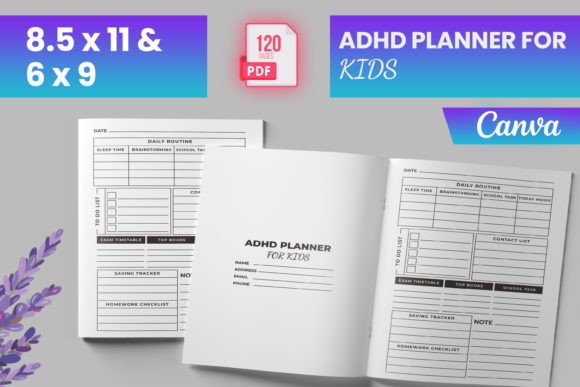
Helping a child with ADHD stay organized, manage time, and build routines often requires more than a standard planner. The Canva Editable ADHD Planner for Kids KDP addresses that gap directly. It is a comprehensive, print-ready interior designed specifically for Amazon Kindle Direct Publishing, but its real value lies in the breadth of tools it offers for day-to-day use. This is not a one-size-fits-all calendar but a collection of over thirty distinct templates, each crafted to support different aspects of a child's life, from schoolwork and chores to emotional wellness and savings habits.
What Makes This Planner Collection Worth Examining
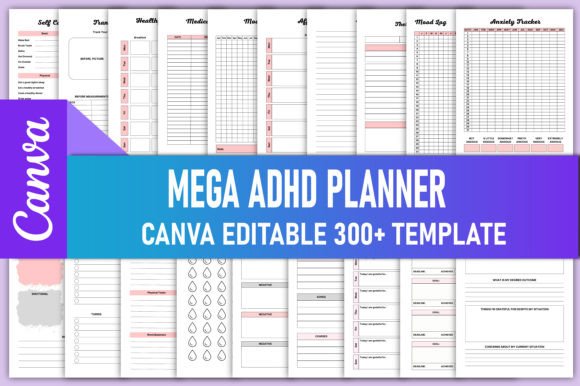
The core offering is a set of 100 formatted templates, delivered as both high-quality print-ready PDFs and an editable Canva link. The editable link allows users to adjust fonts, colors, layout elements, and even add or remove sections before printing. For parents and educators, this means tailoring the planner to a specific child's age, preferences, or challenges. For KDP publishers, it means a ready-to-upload interior that meets Amazon's formatting requirements without additional design work.
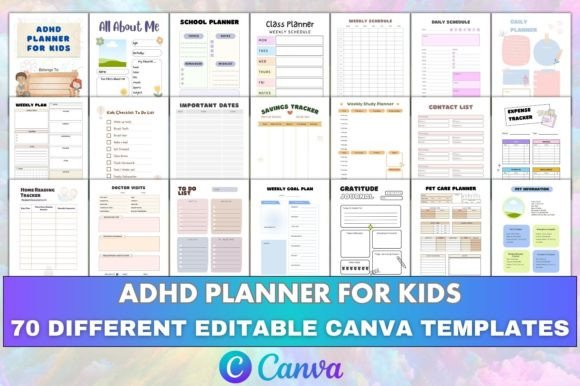
The templates cover a wide range of categories that go beyond simple scheduling. You get the expected daily, weekly, and monthly schedules, but also tools like a Gratitude Journal, Sleeping Tracker, 30-Day Challenge, Pet Care Planner, Expense Tracker, and Wellness Journal. This variety reflects an understanding that children with ADHD benefit from structure across multiple domains, not just school-related tasks.
Key Characteristics and Purpose
Each template serves a specific function, but together they form a system that can be used sequentially or in isolation. The All About Me page helps establish a sense of ownership and identity, which is often a motivating factor for children who resist external structure. The Daily Routine and Daily Chore Chart provide visual, predictable sequences that reduce anxiety about what comes next. The Homework Tracker and Grade Tracker give concrete ways to monitor progress and celebrate small wins.
The Class Planner, School Timetable, and Weekly Study Planner are particularly useful for older children who need to juggle multiple subjects and extracurricular activities. These templates encourage forward planning and help prevent last-minute scrambling. The Important Dates page and Year at a Glance offer a big-picture view that many children with ADHD find grounding.
What sets this collection apart from generic planner interiors is the inclusion of emotional and behavioral tools. The Gratitude Journal, Wellness Journal, and Sleeping Tracker address the executive function challenges that often accompany ADHD, such as emotional regulation, self-awareness, and sleep hygiene. These are not afterthoughts but integrated components of the planner.
Strengths and Practical Value
The most significant strength is the flexibility provided by the editable Canva link. A parent can remove distractions, simplify layouts, or add visual cues that help a child focus. For example, you can increase font size, use high-contrast colors, or add icons to the Daily Schedule. This level of customization is rare in ready-made KDP interiors and adds considerable long-term value.
The print-ready PDFs are formatted to KDP specifications, which saves time for self-publishers. The files are clean, with consistent margins, bleeds, and trim sizes. This reduces the risk of rejection during Amazon's review process. For home and office use, the PDFs can be printed on standard letter or A4 paper, hole-punched, and placed in a binder, or bound professionally at a print shop.
Another practical advantage is the sheer number of templates. With over 30 unique page types, you can select only the ones that fit a particular child's needs. A child who struggles with transitions might benefit most from the Daily Schedule, Weekly Plan, and Daily Routine. A child who needs motivation around tasks might respond better to the Chore Chart, Savings Tracker, and Bucket List. You are not forced to use every page.
The Doctor Visits and Contact List templates add a practical layer for parents managing appointments and communication with teachers or therapists. These sections are often overlooked in children's planners but are essential for coordination between home, school, and healthcare providers.
Usability and Real-World Performance
In real-world use, the planner works best when introduced gradually. Handing a child a full binder of 100 pages can feel overwhelming. A more effective approach is to print a few key templates—perhaps the All About Me, Daily Routine, and Kids Checklist To Do List—and add more as the child becomes comfortable with the system. The editable Canva link makes this iterative process simple; you can adjust the design as you learn what works.
The 30-Day Challenge and Weekly Goal Plan are particularly effective for building momentum. These templates break larger objectives into smaller, measurable steps, which aligns well with how children with ADHD process goals. The Gratitude Journal provides a low-stakes daily writing prompt that can improve emotional vocabulary and self-reflection over time.
For educators, the Study Planner, Homework Tracker, and Grade Tracker offer a structured way to communicate progress with parents. A teacher can print the relevant pages at the start of a term and share them with families, creating consistency between school and home.
The Daily Meal Planner and Food Tracker might seem unrelated to ADHD, but many parents report that nutrition and routine eating schedules affect their child's focus and mood. Including these templates shows a holistic understanding of what supports a child with ADHD.
Who Benefits Most From This Planner
Parents of children with ADHD are the primary audience. The editable nature means you can adapt the planner as your child grows, changes schools, or faces new challenges. It is also valuable for homeschooling parents who need a structured yet flexible system to track multiple subjects and activities.
Educators and special education teachers can use individual templates for specific students or adapt the entire planner for classroom use. The Class Planner, School Timetable, and Homework Tracker are classroom-ready with minimal customization.
Therapists, counselors, and coaches working with children and families can incorporate the Wellness Journal, Sleeping Tracker, and Gratitude Journal into their practice. These templates support therapeutic goals around self-monitoring and emotional awareness.
KDP publishers and content creators will find this interior ready for listing on Amazon. The combination of print-ready PDFs and editable source files means you can list the product without spending additional time on formatting. If you want to create a series of planners, the Canva link allows you to generate variations by changing colors, titles, or specific pages.
Possible Limitations to Consider
While the collection is comprehensive, the 100-page count means some templates may be repeated with minor variations. For example, you will find multiple daily schedule and weekly plan layouts. This gives you options, but if you prefer a minimalist approach, you might want to curate the selection before printing.
The editable Canva link requires a free or pro Canva account. Most users already have one, but if you are new to Canva, there is a short learning curve. The templates use standard fonts and layouts, so editing is straightforward, but you will need basic familiarity with drag-and-drop design tools.
Because the planner is designed for KDP interior use, some pages are intentionally simple in terms of graphics. If you are looking for heavily illustrated or themed pages for a very young child, you may want to add your own decorations or icons. The clean, professional style works well for ages 6 to 14 but may feel too plain for a preschooler.
The Expense Tracker and Savings Tracker assume a basic level of numeracy and financial awareness, which is appropriate for older children but not for younger ones. You can skip those pages entirely or reserve them for later use.
Practical Recommendations for Getting Started
Begin by downloading the PDFs and reviewing the full list of templates. Identify the top five to ten pages that address your child's most immediate needs. Print a few copies of each and test them over one to two weeks. Ask the child for feedback—what feels helpful, what feels like a chore, and what layout is easiest to follow.
Use the editable Canva link to make adjustments based on that feedback. Increase the size of checkboxes, change the color of headings, or add a favorite character or theme. The goal is to create a tool the child wants to use, not one that feels like another requirement.
For KDP publishers, upload the PDFs directly to Amazon following the standard interior requirements. The templates are formatted to meet KDP guidelines, but double-check your chosen trim size and bleed settings before publishing. The editable source file allows you to make last-minute corrections without rebuilding the entire interior.
Long-Term Value and Consistency
The Year at a Glance and 30-Day Challenge templates encourage long-term thinking and habit formation, which are often difficult for children with ADHD. Revisiting these pages regularly can help a child see patterns, celebrate completed challenges, and set new goals. The Home Reading Tracker and Homework Tracker provide year-long records that can be shared with teachers or used for self-assessment.
The Pet Information and Pet Care Planner templates might seem like extras, but they serve a dual purpose: they teach responsibility through structured tasks and provide a non-school-related area where a child can feel competent and in control. This can be a powerful confidence builder.
Because the planner is delivered as editable files, you can reuse the templates year after year. Update the dates, change the goals, and print again. The initial investment continues to deliver value across multiple school years or publishing projects.
Final Thoughts on Fit and Usability
The Canva Editable ADHD Planner for Kids KDP is best understood as a flexible toolkit rather than a fixed product. Its strength lies in the range of templates and the ability to customize each one. For parents who are tired of generic planners that don't account for the specific organizational and emotional needs of a child with ADHD, this collection offers a practical starting point. For KDP publishers, it provides a ready-to-use interior that meets Amazon's standards and can be adapted for multiple niches.
If you need a planner that covers school, home, health, finances, emotions, and personal goals in one package, and you value the ability to edit and print exactly what you need, this resource is worth exploring. Start small, customize freely, and build a system that fits your child's unique way of navigating the world.